about us
Power & Energy Materials Engineering Services (PEMES):
On April 24, 2025, PEMES, the company that would be Masters in Materials Engineering Solutions and services in future has been founded.
At PEMES Materials, we provide world-class materials expertise in Materials & Process Engineering. We’re a science-based, technology-powered solutions provider focused on applied and advanced materials.
We are an independent Materials and Metallurgical engineering consulting firm that provides technical services in metallurgical engineering, corrosion engineering technology, materials failure analysis, mechanical testing and characterization, materials selection and manufacturing processes for products and industrial equipment, welding failure analysis, and
surface failure investigation.
As Professional Engineers and Material Specialists, we bring many years of experience in materials engineering, failure analysis, manufacturing processes analysis, corrosion engineering, materials selection for corrosion control and mechanical systems, and protective coatings. With our scientific and engineering practice expertise, we well-prepared to assist you in materials engineering solutions, engineering design, and application of methodologies to mitigate corrosion and prevent damages.

our services
- Aerospace Materials
- Gas Turbine Materials
- Steam Turbine Materials
- Wind Turbine Materials
- Building Materials
- Additive Materials
- Failure Analysis
- Tensile and Compression
- High Cycle Fatigue
- Low Cycle Fatigue
- Fatigue Crack Growth
- Fracture Testing
- Creep
- Creep Crack Growth
- Fretting Fatigue
- Stress corrosion Cracking
- All kind of Mechanical Testing
- Design data Curve Generation
- Statistical Analysis
- Materials process Specification services
- Welding Process Specifications
- Welding Process Qualifications
- Raw Materials
- Forging
- Casting
- Coatings
- Heat Treatment
- Laminate Fabrication
- Specimen Cutting
- End Tab Bonding
- Composite Mechanical Testing
- Composite Coating Strength Testing
- Data Analysis
- Failure Analysis
- ISO/IEC 17025
- Nuclear Safety Training
- Material Testing
- Material simulation
- Material Forming
our leadership
Dr P J Singh’s insights are forged from his distinguished career in advanced materials, beginning as a nuclear reactor scientist at the Indira Gandhi Centre for Atomic Research, Kalpakkam, India to GE Energy, GE Renewables and Rolls-Royce Aerospace Engineering.
During his tenure in various energy disciplines, he gained hands-on in Materials Testing and research expertise in Materials & process engineering on steel, titanium, nickel-based alloys, additive materials and composite materials.
As an aerospace materials/gas turbine engineer at Rolls-Royce and GE specialized in designing, developing, and testing advanced materials like single crystals, additive materials, composites and high-strength super alloys for aircraft, spacecraft, and other aerospace systems, focusing on creating structures that are lightweight, strong, and can withstand extreme conditions and analyze material properties, optimize manufacturing processes, and ensure materials meet stringent performance and safety standards for aerospace applications.
In Renewables, Dr Singh has gained hands-on and Research expertise in manufacturing and Testing of composite materials for wind turbine Blades qualification, as Turbine blade Material & process Engineer at GE Renewables.
This experience became the driving force behind his entrepreneurial venture, PEMES, which he founded and now leads as CEO and Technical Director.
Reach out to us today to explore how we can best support your need in Materials Science and Engineering.
Our Customer Charter
PEMES Customer Charter
At PEMES Materials, we are committed to delivering world-class expertise in Materials Science and Technology in a world-class manner—every time. This Customer Charter outlines what you can expect from us as we strive to meet and exceed the needs of our customers.
Our experiences ensure we operate under robust quality management procedures and cyber security that guarantee precision, data security and knowledge in everything we deliver.
We understand that each client faces unique challenges and requirements. That’s why we tailor our services to deliver what you need, when you need it—even when time is tight.
Our communication philosophy is simple: we keep you in the loop and out of the dark. You’ll have direct access to the technical team working on your project, and we’ll always listen to your feedback.
The best outcomes often come through collaboration. We believe in sharing knowledge and expertise throughout your project—and learning from yours in return. By working together, we combine insight, experience, and innovation to achieve the best possible results.
We know that value matters. That’s why we aim to remain competitive and transparent in our pricing—no hidden fees, no surprises.
We are committed to implementing a best-in-class Quality Management System—a systematic approach to ensuring that our services, and processes consistently meet or exceed our customer expectations.
our mission
We are capable of building a great foundation for quality engineering solutions for our customers. We built trust by crafting the durability of power and energy materials. We love to turn challenges into opportunities to prove our strength. We plan to offer smart solutions to our customers on a large scale. We develop innovative and creative solutions to meet our customers' needs. Are you ready to plan today with us to get the solutions in an innovative way? As we offer clever creations for our clients with endless techniques. Our experts’ unique creative brains offer solutions in a rare way and build customer trust with care.
our vision
We aim to be in a position where we can offer innovative engineering solutions worldwide. Engineering solutions will be built with precision in every angle and structures along with safe. We help to bring your imagination and dreams into reality. We all know that the best engineering solutions will elevate our lives in the right way. We focus on bridging challenges with creativity and ideas. Our prime duty is to make quality materials and ensure your safety in all ways. We empower with our Ideas and elevate the standards in our own way. We build our pride with our great inner quality in providing the best to our clients.
our value
We offer a better tomorrow by bringing the best ideas to life. We design the impossible with our brilliance in avoiding the defects. The engineering solutions we offer are elegant solutions. We frame the right sketches to offer you seamless services. We design smarter and not harder by even challenging the physics. Smart ideas will bring a long-lasting dream to reality, along with bright solutions and no confusion, especially when it comes to engineering. We always build the best in a wise way and touch the skies with excellence. We craft the materials with the best plans by trusted hands. We invent solutions and quality first to make great progress, and also assist you in workflow with our effective ideas through collaboration.
quality & cyber security
We built trust with our customers by offering uncompromising quality and solid security. We offer a secure and reliable future by balancing both functions and structures. Our professionals make secure designs with high standards. Professional solutions give you assured security and trust in a unique way. We are responsible for refreshing your future with quality services. Aerospace engineering slogans will elevate your future. Explore the new heights of innovation with our design techniques. We provide a safe foundation for power and energy materials. We assure you precision in every aspect and help you to take the right solutions. We empower basic ideas and improve your vision with a great standard. Our expertise will construct materials of good quality and safety for every usage.
Founder’s Message
Welcome and thank you for visiting PEMES’s website. I hope you will find the website useful and informative and gain a better understanding about Power & Energy Materials Engineering Services.
Starting from a humble beginning, formed with the aim of developing advanced materials technology directive in support of aerospace and composite materials development and in-house technology and supporting services.
The increases we’ve seen in Space, Military aircraft engine, and general composites have made us to start this venture.
Innovation and our talented team are fundamental to PEMES’s sustainable growth. We are committed to fostering a collaborative environment that enables our collective success.
We are also committed to lowering carbon footprints to safeguard our mother earth. In PEMES, together we can deliver a sustainable and promising future for all!
Thank you for your interest in Power & Energy Engineering Materials Services. We look forward to collaborating with you in redefining the future of aerospace and composite engineering.
- Dr P J Singh
- Founder & Technical Director
- Power & Energy Materials Engineering Services
Composite Testing
Composite test specimen manufacturing involves creating representative samples of composite materials for testing their mechanical, physical, or other properties. This process often includes laminate fabrication, specimen cutting, and end tab bonding, with a focus on precision and adherence to standards to ensure reliable test data.
Key Aspects of Composite Test Specimen Manufacturing:
Laminate Fabrication:
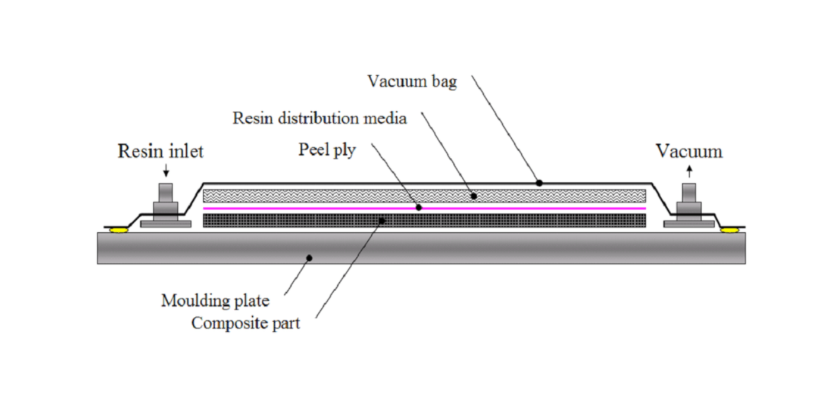
Creating the composite material itself, which may involve hand lay-up, resin transfer molding, or other methods, depending on the desired material and application.
There are many methods used in industry to manufacture a polymer matrix composite and it is very important that for the purposes of mechanical testing, laminates are high-quality and consistent. Our composite technicians are experienced in manufacturing test panels from glass fibre and polymer resins by wet lay up, spray up, vacuum in fusion and hot pressing.
We also work alongside strategic partners to complete laminate preparation by autoclave or other methods that you may need.
Specimen Cutting:
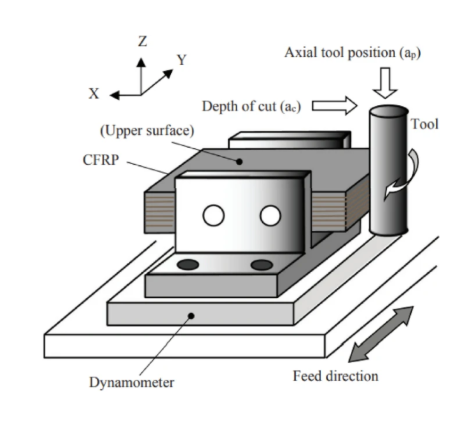
Precisely cutting the fabricated laminate into specific shapes and sizes for testing. Waterjet cutting or diamond-coated blades are often used to minimize damage.
Our in-house machine shop is manned by highly skilled engineers experienced in the preparation of non-metallic, composite and metal samples. The workshop is equipped with diamond-coated tooling, surface grinding, drilling and milling machines which can be used for the preparation of regular and irregular composite test specimens.
End Tab Bonding:
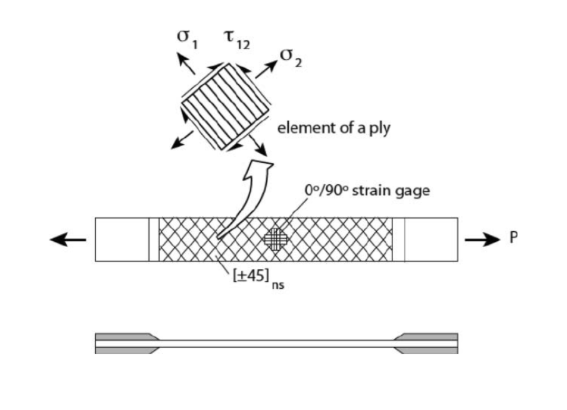
Attaching end tabs (often made of glass fiber/epoxy or aluminum) to the specimen to prevent premature failure at the grips during testing, especially for tensile specimens.
Once a laminate has been cut and machined, the specimen will be prepared for testing. For tensile and some compression tests this will include tabbing the ends of the sample to reduce the risk of failure in the grip. We have also developed strain gauging techniques as part of our specimen production process as seen in the picture to the left.
Surface Preparation:
Preparing the specimen surface for strain gauge application if needed.
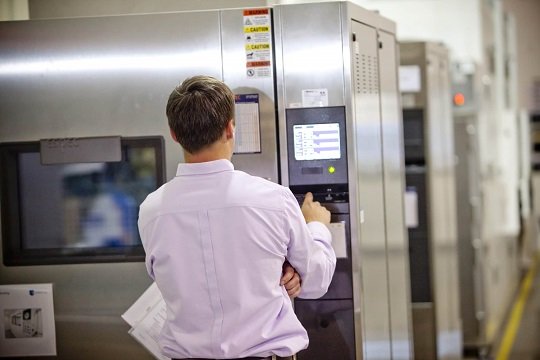
Conditioning:
Pre-conditioning the specimen in specific environmental conditions (e.g., temperature,
humidity, fluids) prior to testing.
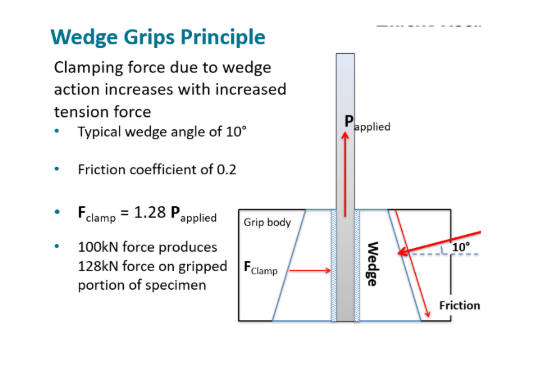
Gripping:
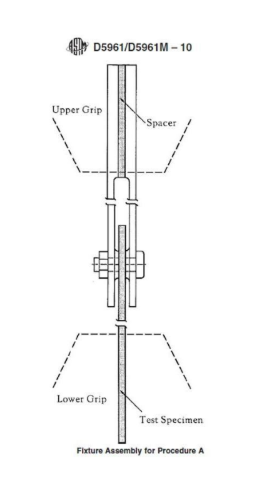
Ensuring proper gripping of the specimen during testing, often using wedge grips that
increase clamping force as the tensile load increases.
Specific Considerations for Different Tests:
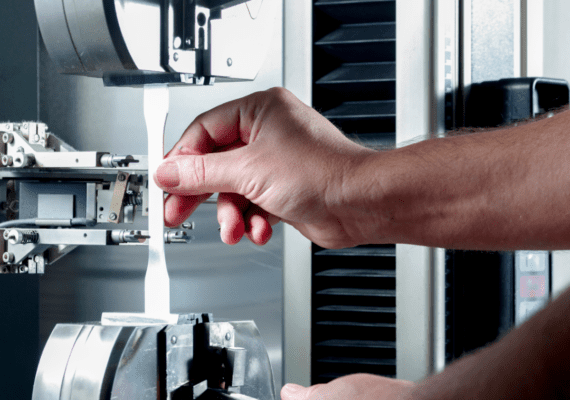
- Tensile Testing: Requires careful attention to specimen shape, tab bonding, and gripping to avoid grip-induced failures.
- Compression Testing: Assesses the resin’s ability to prevent fiber buckling and is often matrix dominant.
- Shear Testing: Evaluates the transfer of stresses and is also matrix dominant.
- Flexural Testing: Combines compressive, tensile, and shear forces.
Importance of Precision and Standards:
- High precision in specimen preparation is crucial for obtaining accurate and consistent test data.
- Adhering to relevant standards (e.g., ASTM, ISO) is essential for comparability and reliability of test results.
- Specialized equipment like the Labcut 5000® from Extec can enhance precision and efficiency in cutting composite materials..

Composite Testing Requirements?
To find out more about our Composite Engineering services, Please free to contact us to get in touch with our Team:

Aerospace Materials
AEROENGINE MATERIALS TECHNOLOGY: A brief introduction
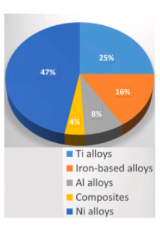
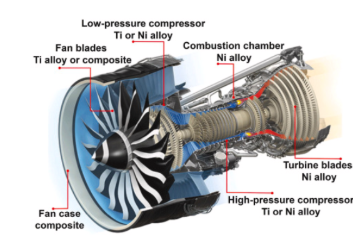
In an aero engine, materials technology is crucial for managing the extreme conditions of high temperature, stress, and pressure. The engine’s different sections utilize a range of specialized materials, from lightweight alloys and advanced composites in the cooler front end to superalloys and ceramics in the scorching hot section. Continuous innovation in
materials is driven by the need for enhanced performance, fuel efficiency, and reliability.
Materials by engine section
Fan and low-pressure compressor
The front sections of a jet engine operate at lower temperatures, prioritizing a high strength- to-weight ratio to reduce mass and increase fuel efficiency.
Titanium alloys: Common in fan blades, casings, and low-pressure compressor components, titanium alloys like Ti-6Al-4V offer high strength and excellent corrosion resistance.
Polymer matrix composites (PMCs): Modern high-bypass engines use lightweight carbon- fiber composites for large fan blades and casings. This reduces weight by 10%–15% compared to titanium and improves fuel efficiency.
High-pressure compressor and combustion chamber
As air is compressed and fuel is burned, temperatures and pressures rise dramatically, requiring materials that can withstand intense mechanical and thermal stress.
Nickel superalloys: These are used for high-pressure compressor blades, disks, and combustor components. These superalloys are designed to maintain their strength and resist creep and fatigue at temperatures above 550°C.
Thermal barrier coatings (TBCs): Ceramics are often applied as coatings to protect the metal components of the combustion chamber from high temperatures and oxidation.
High-pressure and low-pressure turbines
The turbine section experiences the most extreme temperatures, with gases entering at over 1,700°C.
Nickel-based superalloys: These are the primary materials for turbine disks and blades. Advanced manufacturing techniques like directional solidification and single- crystal casting are used to eliminate grain boundaries, which increases creep resistance and prevents blade stretching under heat and centrifugal force.
Ceramic matrix composites (CMCs): These are replacing nickel superalloys in some static and rotating turbine components. CMCs combine ceramic fibers like silicon carbide (SiC) in a ceramic matrix, providing superior heat resistance and lower weight.
Advanced and future technologies
Additive manufacturing (3D printing)
3D printing has become a transformative technology for manufacturing complex, high- performance engine parts.
Design freedom: AM allows engineers to create intricate designs with internalcooling channels, integrated features, and lattice structures that optimize strength and reduce weight.
High-performance materials: Specialized metal powders, such as those made from titanium and nickel superalloys, are used with AM processes like laser powder bed fusion to create certified, flight-ready parts like brackets, housings, and fuel nozzles.
Reduced waste and cost: AM is an additive process, meaning it only uses the material needed, which lowers the buy-to-fly ratio and reduces scrap compared to traditional subtractive manufacturing.
Emerging materials
Continuous development aims to increase engine efficiency by enabling higher operating temperatures and reducing weight.
Intermetallics: Lightweight titanium-aluminide (TiAl) alloys are gaining traction for use in low- pressure turbine blades, where they can reduce weight and withstand high temperatures.
High-entropy alloys (HEAs): These novel alloys, composed of five or more elements, show potential for exceptional strength and resistance to fracture and oxidation at high temperatures.
Hydrogen-resistant materials: With the aerospace industry exploring alternative fuels, research is ongoing to find materials that can withstand the effects of hydrogen, which can cause embrittlement.
Please feel free to get in touch with us in Aerospace material technology…
Additive Materials
MATERIALS BEHAVIOR STUDY IMPORTANCE IN ADDITIVE MATERIALS
Additive materials (AM) are fundamentally different from traditional wrought materials and it has many challenges especially in sensitive applications like aerospace. However, it has been successfully demonstrated in the healthcare and automobile industries.
Aerospace industries spend millions of dollars in additive materials testing because of its unique abilities like produce parts with complex design, less material waste, less lead time etc.
Also, the aerospace industry depends on advanced materials to improve performance, weight and strength.
Aerospace industries have seen a shift from traditional metallic materials to more advanced materials like single crystals (turbine blades), Titanium, inter-metallics (yet to be proved in civil engines), Additive materials and composite materials. There is also a big development as well in joining techniques (Electron beam welding and Inertia welding) and manufacturing processes like Isocon forgings etc.
The new materials and processes need a well-defined and controlled microstructures and mechanical properties like Fatigue, creep and thermo mechanical property evaluation.
Additive Manufacturing is definitely an unproven (completely) manufacturing process and must move towards a technology that can demonstrate a product with defined fracture/mechanical properties.
Parts manufactured with track-based Additive manufacturing processes are generally anisotropic within and between layers like fiber-reinforced composite materials. A detailed study on mechanical properties included low cycle fatigue, high cycle fatigue, creep, high temperature tensile, Crack propagation etc is needed to understand the influence of the binding between tracks and layers. Thus, Materials testing plays a major role in testing the feedstock materials as well as the final product. It is needed to understand the impact of various processing parameters on mechanical properties to come to safe processing zone for production. The uncertainties included Beam traverse speed, powder feed rate, thermal history. Solidification, microstructures, porosity, LOF, residual stresses, mechanical behavior etc.
The correlation between the different parameters and the material properties needs to be better understood. For example, the material behavior of additive manufactured Ti6Al4V (Ti64) can still be very different compared to conventional Ti64 product due to differences in microstructures, location specific heterogeneities, surface roughness and need to understand more on mechanical properties. Microstructure heterogeneity (morphology, crystallography, and alignment with build direction) are to be controlled/tailored in parts with complex geometries and need complete mechanical behavior study for aerospace applications.
What is holding back in using AM in aerospace critical parts?
- Material properties and qualification remains a significant barrier to more widespread
adoption of additive technologies - Preparation of test protocols, procedures, test specimens, analysis methods
- Tests to develop the test methodologies
- Directional dependent anisotropy
- Residual thermal stresses due to rapid and localized melting and cooling etc.
As of now, traditional mechanical test approaches are unsuitable as it is difficult to extract representative test specimens from additive parts which comply to relevant standards. Alternative experimental approaches capable of establishing the mechanical properties by considering location specific microstructure heterogeneity and cross sections needs to be
considered.
The generated mechanical properties are to be correlated to established material properties statistically.
In addition, a detailed study on cracking/fracture (cold cracking, hot cracking, solid state cracking, weldability), porosity (coming from raw material) and Hot Isostatic Pressing (HIP) cracking behaviour on additive material is necessitated. The defects generated in additive materials are similar to casting and welding cracks.
For example, aerospace (OEM) specifications are very stringent to control/limit the porosity levels. Rapid cooling in additive process traps the metallic vapour inside the material leading to spherical gas porosities of sizes, generally less than 100 μm.
Similarly, shrinkage porosity (incomplete flow of metal into the desired melt region) has detrimental effect on the fatigue crack propagation and thus HIP is normally recommended in aerospace parts.
The lack of fusion (insufficient melting resulting from insufficient energy for a given volume of powder) can be controlled by process parameter optimization. It is also very common to observe unmelted powder particles in the pores due to lack of fusion in additive manufactured parts. These unmelted powder particles in the lack of fusion pores act as the fatigue crack initiation sites and the fatigue life is reduced.
The additive process based on melting and solidification produces complex thermal behaviors in the material which is similar to multi-pass fusion welding process. The well- established welding metallurgy knowledge can be transferred/used in understanding the solidification cracking, liquation cracking, strain induced (residual stresses) cracking behaviors etc.
For example, how to reduce the micro-segregation which eventually responsible for solidification cracking?
How to reduce stresses by proper pre-heating etc?.
Similarly, in nickel alloys; The γ- γ’eutectic phase is an example for low-melting-point grain boundary phase, which has the potential for liquation cracking when combined with residual stresses.
Also, it is known that a second-generation precipitation – hardening Ni – Cr alloys (In718) was developed that are strengthened by gamma double prime to improve weldability and avoid strain induced cracking.
Weldability testing is commonly employed to understand the weld cracking. However, standardization in additive materials is the bottleneck and need more research in this area.
Hot isostatic pressing (HIP) is commonly used in most of the critical aeroengine parts to eliminate micro-cracks (by closing all the internal micro-cracks and gas free micro-pores) and to improve the strength-ductility trade-off. It is to be noted that the gas-filled micro pores cannot be eliminated by HIP and so a small number (density) of porosity is inevitable in AM parts? How to eliminate maximum porosity is the need for today’s research.
Please feel free to get in touch with us in Aerospace material technology…
our client